Independent, AJHCS, DVHIMSS, and healthcare conference communities
Conference Field Intelligence
I use healthcare conferences as operating research: a way to learn what executives actually care about, represent communities like DVHIMSS and AJHCS, cover events journalistically, lead tables, build relationships, and translate what happens in rooms into better strategy work.
- Conference field research
- Executive listening
- Healthcare journalism
- Table leadership
- Social media coverage
- healthcare strategy
- healthcare journalism
Project note
In Brief
I use healthcare conferences as operating research: a way to learn what executives actually care about, represent communities like DVHIMSS and AJHCS, cover events journalistically, lead tables, build relationships, and translate what happens in rooms into better strategy work.
Relevant To
- healthcare strategy professionals
- students and early-career healthcare leaders
- conference organizers
- healthcare journalists
- healthcare executives evaluating public work
Search Context
- how to use healthcare conferences for professional development
- healthcare conference networking strategy
- how to turn conferences into field research
- healthcare strategy conference operating notes
7 cited sources
In Brief
I use healthcare conferences as field intelligence: a way to test what leaders care about, see which problems keep resurfacing, and turn rooms into better operating judgment. The work spans AHIP, HIMSS, HFMA, ACHE, APHA, Bamberg, Patient Access Collaborative, and local leadership communities.
Why It Matters
I wrote this for healthcare students, early-career leaders, operators, strategists, and builders who want conferences to produce more than badge scans and LinkedIn posts.
It also explains why conferences show up repeatedly in my work. They are one of the places where healthcare reveals what it actually values.
Operating Context
Healthcare conferences are strange operating rooms. The formal agenda says one thing. The hallway conversations, table questions, sponsor booths, executive body language, and post-session conversations often say something more useful.
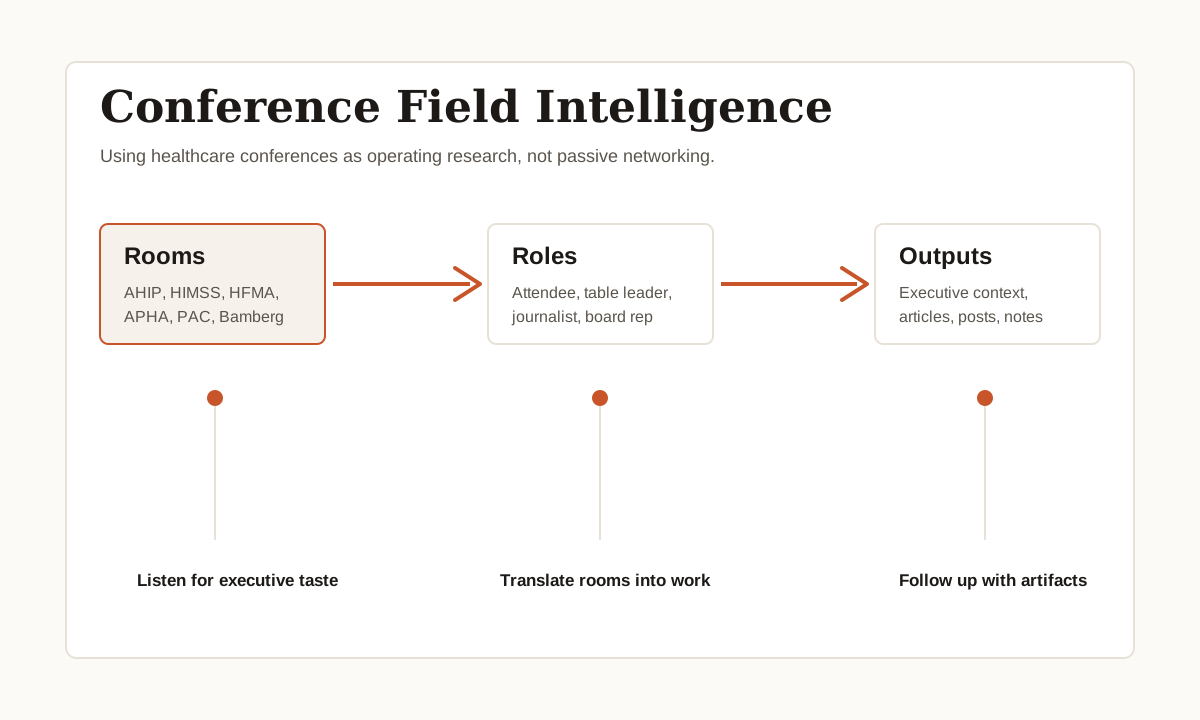
I have attended tens of conferences across payer strategy, health IT, healthcare finance, public health, access, and executive leadership communities. The list includes AHIP, HIMSS and DVHIMSS events, HFMA local events, ACHE local events, APHA events, Bamberg Health events, Patient Access Collaborative, and related healthcare leadership rooms.
Conferences differ by purpose. Some are built for executive taste, some for community, some for vendors, some for technical exchange, and some for public-health scholarship. The useful operator learns to read the room.
What We Built
The work is a repeated operating practice: show up prepared, listen carefully, test the thesis, and turn the strongest lessons into useful public or private outputs.
Across these events, my roles have included:
- attendee and learner
- Patient Access Collaborative poster author
- table leader for access-center discussion
- DVHIMSS board and community representative
- AJHCS representative and relationship builder
- healthcare journalist for Bamberg and AJHCS-style coverage
- social-media operator for conference coverage and executive visibility
- participant in HFMA, HIMSS, ACHE, APHA, AHIP, Bamberg, and local healthcare leadership communities
The output was judgment: what executives respond to, which topics are over-marketed, which operational problems keep resurfacing, which language makes healthcare leaders lean in, and which public outputs are worth creating after an event.
Implementation Playbook
The reusable method is simple but demanding.
- Go in with one operating question. Do not attend with a vague goal to network. Ask something like: what are access leaders worried about this year, what payer strategy is becoming visible, or what AI claims are serious enough to survive executive questioning?
- Separate the official session from the real signal. The slide deck matters, but so do the questions people ask afterward, the problems sponsors over-explain, and the topics executives avoid.
- Track executive taste. Healthcare leaders often tell you what they value indirectly: the metrics they ask about, the examples they remember, the claims they challenge, and the stories they repeat.
- Use table leadership as research. A table leader gets a better view of what peers actually say when they are not performing from a stage.
- Treat journalism as synthesis. Covering an event forces you to decide what mattered, what was new, and what should be ignored.
- Follow up with useful outputs. A useful post, article, podcast, operating note, or introduction is more valuable than a vague “great to meet you.”
- Keep a private learning ledger. The goal is pattern recognition, not gossip.
- Convert conference insight into better projects. A conference is only useful if it changes how you build, measure, communicate, or decide.
Standards, Governance, And Validation
Conference work needs its own evidence discipline.
There are three different kinds of conference knowledge:
| Signal | How I Treat It |
|---|---|
| Public source | A published agenda, poster, article, video, or organizational page can be cited directly. |
| Room observation | Useful for judgment, but usually not something to quote as fact without permission. |
| Private conversation | Useful for relationship and context, but not public evidence unless explicitly approved. |
That distinction matters. I have learned from executives, represented communities, led tables, covered conferences, and used these rooms to sharpen my view of healthcare strategy. Private executive comments, sensitive meetings, and hallway context stay private unless there is explicit approval to use them.
Results And Evidence
The evidence here is cumulative:
- I have attended tens of healthcare conferences across multiple communities.
- I have moved between attendee, journalist, board/community representative, poster author, table leader, and social-media roles.
- At Patient Access Collaborative, the Penn AQM speech analytics work was presented as a poster, and I served as a table leader for an Access Center Deep Dive session.
- At Bamberg and in AJHCS-related work, I have used conferences as journalism and relationship-building infrastructure.
- Through DVHIMSS and local HIMSS/HFMA-style rooms, I have built a stronger view of what Philadelphia-region healthcare leaders care about.
The strongest result is better professional taste. Conferences helped teach me what executives find useful, what they ignore, how public rooms differ from private operating reality, and how to turn a conversation into something concrete.
My Operating View
A bad conference strategy is collecting contacts. A better one is collecting questions. The best one is collecting questions, testing your own thesis against people who can challenge it, and then publishing or building something useful afterward.
I have learned that executives are rarely impressed by broad ambition alone. They respond to clarity, numbers, operating context, and evidence that you understand the constraints they live with. They also notice whether you can listen without immediately trying to sell them something.
That is why conferences matter to my work. They are where I can see the distance between public narrative and operating reality.
Reusable Checklist
Use this checklist before and after a conference:
- Define the question you are trying to answer.
- Identify three people or roles you want to understand better.
- Pick sessions based on operating relevance, not title polish.
- Write down repeated phrases, repeated anxieties, and repeated metrics.
- Note what executives challenge.
- Note what vendors overpromise.
- Capture one useful public output: post, article, note, podcast, diagram, or follow-up email.
- Follow up with specific context from the conversation.
- Add the lesson to a private operating ledger.
- Decide which project, essay, or work page should change because of what you learned.
References
The public references identify the conference communities and organizations behind this work. The account names broad roles and operating lessons while leaving out private conversations, executive names, exact event counts, and photos unless those materials are separately approved.
The operating value came from repeated participation across payer, finance, informatics, public health, access, executive, and journalism rooms.
Frequently Asked Questions
- How should healthcare professionals use conferences well?
- Treat conferences as field intelligence. Prepare a question, attend sessions with a point of view, listen for what executives repeat, take notes on what is not being said, follow up with useful outputs, and convert conversations into better operating judgment.
- What is conference field intelligence?
- Conference field intelligence is the practice of using conference rooms, panels, table discussions, hallway conversations, journalism, and social media coverage to understand what healthcare leaders actually care about and how those priorities are changing.
- How can conference attendance become more than networking?
- It becomes more than networking when it produces reusable insight: a sharper thesis, a public article, a better project, a stronger relationship, a board or community role, or a clearer understanding of what executives find useful.
Cited Sources
- AHIP AHIP
Public context for payer and health-insurance industry conference communities.
- HIMSS Healthcare Information and Management Systems Society
Public context for health IT, digital health, and informatics conference communities.
- HFMA Healthcare Financial Management Association
Public context for healthcare finance events and professional communities.
- ACHE American College of Healthcare Executives
Public context for healthcare executive leadership events and professional communities.
- APHA American Public Health Association
Public context for public-health conference communities.
- Bamberg Health Bamberg Health
Public context for Bamberg healthcare events and media work.
- Patient Access Collaborative Patient Access Collaborative
Public context for access-center learning communities and the Spring Symposium poster context.