Harvard CS50, Duke coursework, and independent software practice
CS50, Software, and AI Formation
CS50 mattered because it made technical possibility visible from rural Maine. Harvard, David J. Malan's teaching, Scratch, later Duke web-development coursework, and years of agent-assisted building gave me technical literacy without forcing me to pretend I was a syntax-first software engineer.
- CS50
- Scratch
- Algorithms and abstraction
- JavaScript and web development
- Agent-assisted software development
- technical formation


Project note
In Brief
CS50 mattered because it made technical possibility visible from rural Maine. Harvard, David J. Malan's teaching, Scratch, later Duke web-development coursework, and years of agent-assisted building gave me technical literacy without forcing me to pretend I was a syntax-first software engineer.
Relevant To
- healthcare AI builders
- students from nontraditional education backgrounds
- operators learning technical systems
- strategy professionals working with software teams
- agent-assisted software builders
Search Context
- how CS50 helps non software engineers
- technical literacy for healthcare AI builders
- how to learn programming without becoming a software engineer
- why CS50 matters for systems thinking
5 cited sources
In Brief
CS50 mattered because it made technical possibility visible before I had the social proof that a life in higher education, software, or advanced technical work was realistic. It taught me computational thinking early, even though I later learned that my strength was systems thinking more than syntax-first programming.
Why It Matters
I wrote this for students from small towns, religious or nontraditional education backgrounds, healthcare operators, strategy professionals, and AI builders who need technical literacy but do not necessarily want to become full-time software engineers.
It also explains why I can be close to software, AI, analytics, and agentic development without describing myself as a traditional programmer. CS50 gave me the mental model. Later tools expanded what I could build.
Operating Context
I grew up in a very small town in Maine. In the religious environment I was raised in, higher education beyond high school did not feel culturally encouraged. I was raised as a Jehovah’s Witness, and at least in the time and community I grew up in, college could be treated as unnecessary or even unwise.
When I was about 10, my parents and I visited Boston because my cousin was at Harvard. We toured the campus, walked through the museums, and saw a version of academic life that felt almost impossibly far away from rural Maine. At that age, Harvard represented the best of what I imagined higher education could be. I now understand colleges and universities much more broadly, with deep respect for many kinds of institutions, but at 10 years old Harvard was the signal that a different life existed.
My parents did not go to college, but they were intellectual people and proud of me. My uncle had gone to Harvard, and my dad looked up to him in a way I understood more fully later. That family context made the university feel both close enough to see and far enough to feel impossible.
What We Built
The first real outcome was a way of thinking.
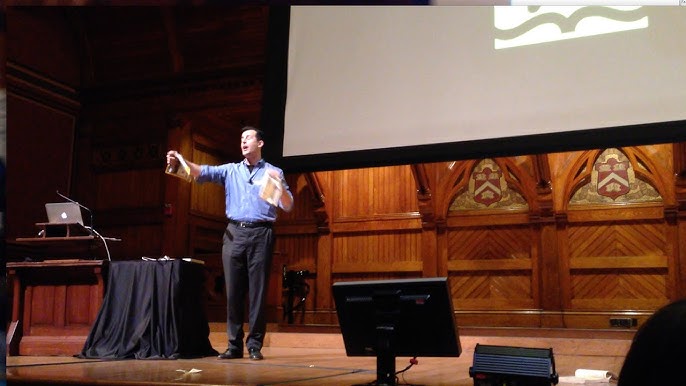
I started watching CS50 around age 11 or 12 from rural Maine, on internet that I remember being under 1 Mbps, roughly 854 kbps. One of the lectures that stayed with me was David J. Malan using the phone book to explain search and what becomes possible when you structure a problem correctly. It was theatrical, but it was also the exact kind of teaching that made abstraction feel physical.
CS50 taught me:
- algorithms as ways to think and code to write
- why data structure changes the cost of a problem
- how abstraction lets one idea apply across many systems
- why debugging is a form of disciplined curiosity
- how Scratch can make programming visible before syntax becomes the barrier
- why computer science is an engineering language as well as a career track
I later took Duke web-development coursework that focused more directly on JavaScript, HTML, CSS, and syntax. That experience was clarifying in a different way. CS50 showed me why programming mattered and how software people think. Duke showed me the actual syntax and repetition required to build websites by hand. That was when I realized I did not want to spend my life as a syntax-first programmer.
The funny part is that I came full circle. I now build applications, direct software work, use agent-assisted development, and work near some of the most complex healthcare AI problems I have encountered. The difference is that I do it as an operator and systems thinker with technical literacy, not as someone pretending to be a conventional software engineer.
Technical Formation Map
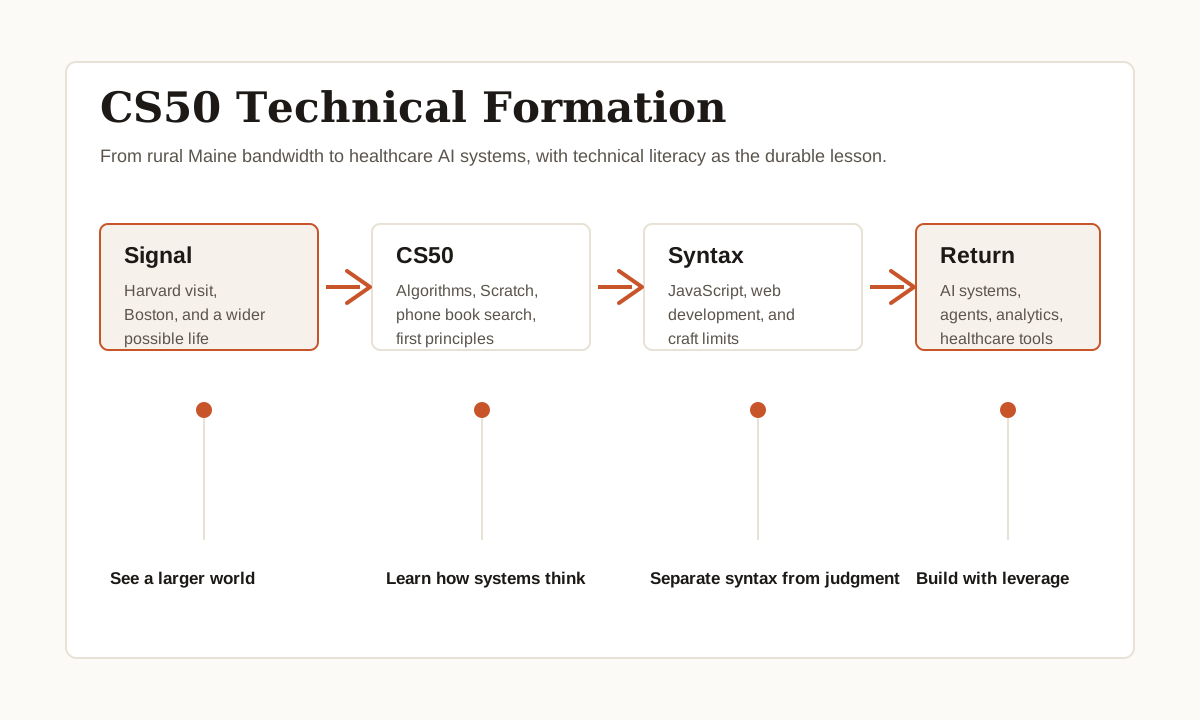
The map is simple: Harvard made the world visible, CS50 made technical thinking visible, syntax work clarified what I did and did not want to do, and agent-assisted development brought the building capacity back.
Implementation Playbook
For people who want technical literacy without becoming full-time programmers, I would use this path:
- Start with a first-principles course like CS50.
- Pay attention to algorithms, data structures, abstraction, and debugging more than language trivia.
- Build something visual in Scratch or a similar environment so logic becomes concrete.
- Learn enough syntax to respect the craft.
- Notice whether you enjoy syntax for its own sake or whether you are more interested in systems, products, workflows, or decisions.
- Learn how software teams talk about state, data, errors, dependencies, testing, and deployment.
- Use AI coding tools only after you understand enough to judge their work.
- Treat agent-assisted development as a tool, not magic.
- Build small tools around real problems you understand.
- Keep returning to the question: what can this system safely and usefully do?
That last question matters especially in healthcare. A healthcare AI tool is not impressive because it can generate fluent text. It is useful only if it fits source-of-truth logic, validation, workflow, patient safety, privacy, and human review.
Standards, Governance, And Validation
The standard I took from CS50 was not “write code quickly.” It was understand the problem clearly enough that the code has a reason to exist.
That standard still applies when I work with AI and software systems:
- What is the source of truth?
- What data structure represents the real-world object?
- What happens when the input is wrong?
- How does the system fail?
- Who reviews the output?
- What should be automated, and what should remain human judgment?
- What does a test prove, and what does it not prove?
- What is the cost of being confidently wrong?
CS50 also taught me to respect teaching quality. David J. Malan’s lectures made hard ideas feel possible without making them shallow. That matters because a lot of technical education fails either by intimidating people or by oversimplifying the work. The best technical teaching gives people dignity and rigor at the same time.
Results And Evidence
The evidence is an arc, not a formal credential ROI calculation.
| Signal | What It Shows |
|---|---|
| Harvard visit around age 10 | Higher education became visible as a possible world instead of an abstraction. |
| CS50 lectures around age 11 or 12 | Computer science became accessible from rural Maine, even with limited bandwidth. |
| Scratch and early projects | Programming became something I could manipulate instead of admire from far away. |
| Duke web-development coursework | Syntax and web craft became concrete enough for me to know my limits and preferences. |
| Later agent-assisted software work | The CS50 mental model became useful again once AI tools made building more leveraged. |
| Healthcare AI and analytics work | Technical literacy now supports source-of-truth design, validation, automation, and operational analysis. |
The result is not that CS50 made me a software engineer. The result is better: it made me technically fluent enough to collaborate with software, data, and AI systems while staying grounded in healthcare operations.
My Operating View
I used to think not loving syntax meant programming was not for me. I now think that was too narrow.
There are people who should write code every day because they love the craft at the line level. I respect those people deeply. But there is another role that matters: the operator who understands enough software to ask better questions, design better workflows, evaluate AI output, and know when a technical answer is fake confidence.
CS50 gave me that foundation. It showed me that software is decomposition, search, abstraction, representation, testing, and judgment.
That is why the story still matters now. I work in healthcare environments where AI and analytics are moving fast, and the people making decisions need enough technical literacy to avoid being dazzled by demos. The CS50 lesson is still active: understand the structure of the problem before you trust the output.
That foundation shows up most clearly in the JHP knowledge pipeline and Penn AQM evaluation, where technical fluency mattered because the real work was source structure, measurement design, validation, and judgment.
Reusable Checklist
Use this checklist if you are trying to build technical literacy as a healthcare operator or strategy professional:
| Skill | Practical Test |
|---|---|
| Abstraction | Can you explain the general pattern behind a specific workflow? |
| Data structures | Can you describe what the system needs to remember and how it is organized? |
| Search and complexity | Can you tell when a task gets harder because scale changed? |
| Debugging | Can you isolate whether the failure is input, logic, system, or user behavior? |
| Syntax respect | Can you read enough code to know what the system is trying to do? |
| AI review | Can you tell when a generated answer is plausible but unsupported? |
| Workflow fit | Can you explain who uses the tool, when, and with what source of truth? |
| Human oversight | Can you say what should not be automated? |
The practical goal is not to win arguments with engineers. It is to become a better partner to them, a better reviewer of AI systems, and a better builder of small tools that solve real operating problems.
References
The public sources cover CS50, David J. Malan, Scratch, Harvard, and Duke web-development coursework. The religious and family context is personal background, not a universal claim about every family or community.
CS50 did not make me a conventional software engineer by itself. It gave me technical literacy, systems language, and the confidence to keep building. That literacy later became useful in healthcare analytics, AI validation, automation, and agent-assisted software development.
Frequently Asked Questions
- Why did CS50 matter to me?
- CS50 made technical possibility visible early. It taught algorithms, abstraction, computational thinking, and software logic from first principles, which later helped me reason about analytics, healthcare AI, automation, and agent-assisted software even though I did not become a syntax-first programmer.
- Can CS50 help someone who does not want to be a full-time programmer?
- Yes. The durable value is technical literacy: understanding how software works, how engineers think, what abstraction means, why data structures matter, and how to communicate with technical teams or AI coding systems.
- How does technical literacy connect to healthcare AI?
- Healthcare AI requires more than prompt writing. It requires source-of-truth logic, validation, workflow awareness, data structure judgment, and enough software literacy to know what a system can and cannot safely do.
Cited Sources
- CS50x Harvard University
Public context for CS50's online introduction to computer science.
- David J. Malan Harvard John A. Paulson School of Engineering and Applied Sciences
Public faculty context for CS50's lead instructor.
- About Scratch MIT Scratch
Public context for Scratch as an introductory creative coding environment.
- Programming Foundations with JavaScript, HTML and CSS Duke University via Coursera
Public context for Duke web-development coursework similar to the syntax-focused learning I describe.
- Harvard University Harvard University
Public institutional context for the early campus visit that made elite higher education feel visible.