Jefferson Population Health
Jefferson Colorectal Screening Outreach Redesign
I led a colorectal screening outreach redesign across several hundred thousand eligible patients, treating FIT kit completion, Cologuard adherence, reminder cadence, patient instructions, and staff burden as the real economics of prevention.
- Population health outreach
- Cologuard / multitarget stool DNA (mt-sDNA)
- FIT / iFOBT kits
- Epic MyChart
- Letters and mailed instructions
- population health
- colorectal screening

Project note
In Brief
I led a colorectal screening outreach redesign across several hundred thousand eligible patients, treating FIT kit completion, Cologuard adherence, reminder cadence, patient instructions, and staff burden as the real economics of prevention.
Relevant To
- population health leaders
- quality improvement teams
- preventive-care program managers
- value-based care operators
Search Context
- how to design colorectal cancer screening outreach
- FIT kit versus Cologuard outreach completion
- population health screening workflow design
7 cited sources
Operating Context
Jefferson Population Health was working against a familiar prevention problem: colorectal cancer screening gaps were visible, clinically important, and operationally difficult to close. The available outreach pathways did not behave the same way in practice.
- FIT kits, formally fecal immunochemical tests and often operationalized as iFOBT/FIT outreach, appeared cheaper in year one but depended on annual completion and repeat patient action.
- Cologuard and other multitarget stool DNA workflows carried a higher unit cost, but the observed program had materially higher completion and a longer screening interval.
- In-person colonoscopy offers remained clinically important, but were not the only realistic path for closing population-level gaps.
- Staff time, outreach repetition, patient acceptance, and repeat-screening likelihood all changed the practical economics.
The work sat at the intersection of prevention, operations, and financing. The useful question was which pathway was most likely to close the gap for real patients while making sustainable use of outreach capacity.
Constraint
The program had to be evaluated under constraints that are common in population health and easy to miss in a spreadsheet.
- A lower per-test price did not automatically mean lower program cost once annual outreach, noncompletion, and retesting were included.
- A higher-completion pathway could still be difficult to justify if the financial benefit arrived outside the payer’s expected member tenure.
- Early-detection and cost-savings logic could be clinically and operationally persuasive without being publication-ready as a measured outcome.
- Payer-specific attribution is sensitive and should not be included publicly without documentation and explicit approval.
The constraint made this a systems problem. A screening strategy that looks expensive in procurement terms may be more rational when adherence, three-year cadence, and staff burden are included.
What We Built
I led the project under the Director of Population Health. The work focused on redesigning the FIT kit outreach model within the broader colorectal screening program. The surrounding Epic and outreach infrastructure was related to the Epic/MyChart messaging overhaul, while this project went deeper on colorectal-specific cadence, printed instructions, mailed materials, and completion behavior.
The redesigned FIT kit workflow changed:
- the MyChart message
- the patient letter
- the level of detail in kit-completion instructions
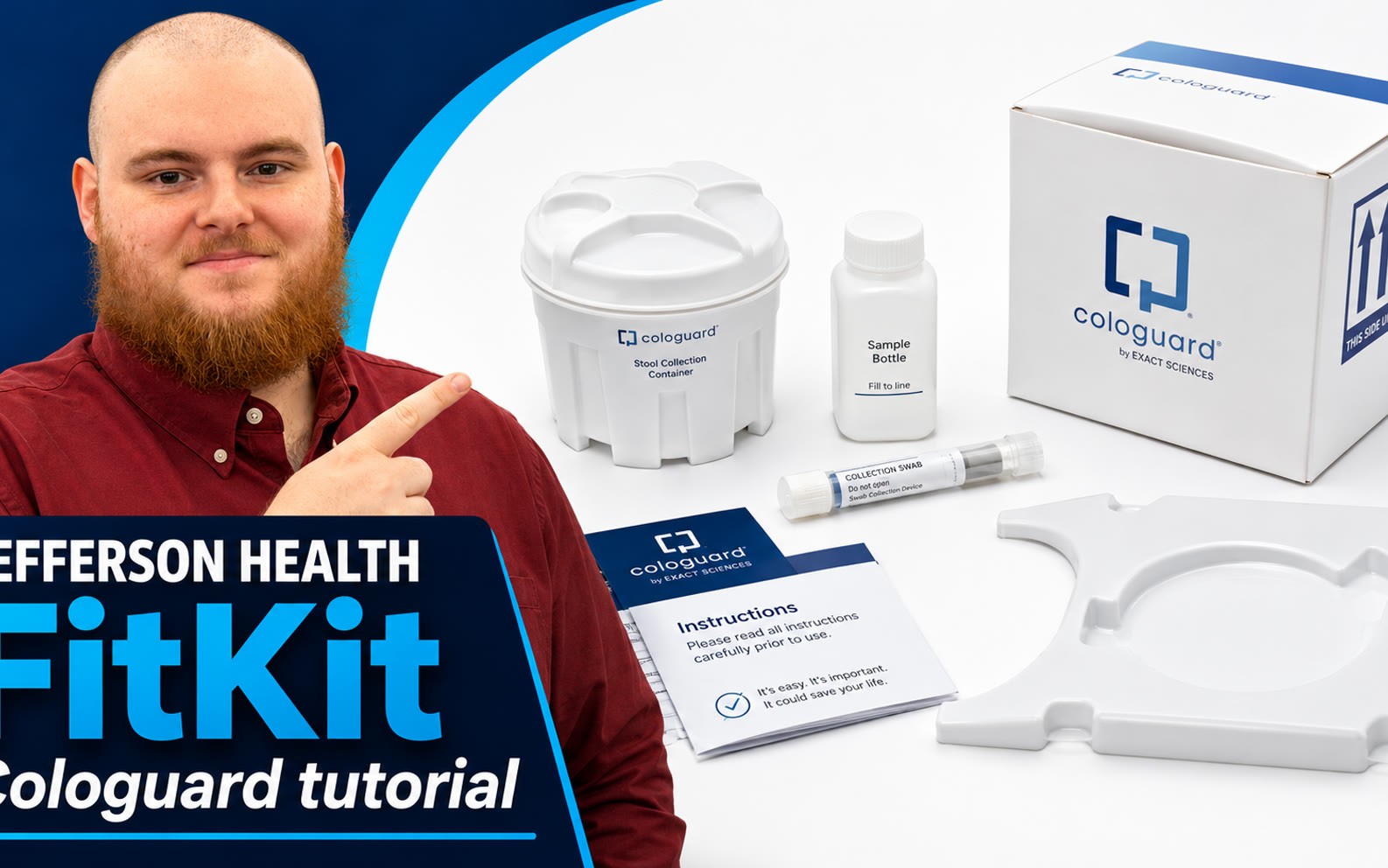
- the inclusion of a QR code to a tutorial video
- the printed envelope presentation with Jefferson branding
- the reminder cadence and methodology
- the mimicry of the vendor-style follow-up model used by Cologuard / mt-sDNA outreach
The official completion outcome was resulted test, not merely kit ordered, kit mailed, or outreach attempted. That distinction matters because a screening program only closes the gap when the test is completed and resulted.
The same source-governance instinct connects to the JHP EOC/ANOC knowledge pipeline: both projects started by defining the authoritative source, the workflow owner, and the metric that counted as completion.
Analysis And Design Work
I compared Cologuard / multitarget stool DNA, FIT kits, and in-person colonoscopy offers through a population-health operating lens.
The analysis considered:
- completion rates by pathway
- annual versus multi-year screening cadence
- repeat-screening likelihood
- gap-closure mechanics
- detection logic, without claiming verified stage-shift outcomes
- outreach touches and staff time
- the difference between health-system value and payer value
The project scale covered several hundred thousand eligible patients. I am not including the exact denominator here, but the scale was large enough that the operational pattern mattered.
The project metrics record Cologuard completion at roughly 63 percent in the observed program. FIT kit completion was roughly 18 to 23 percent before intervention. Jefferson’s internally built intervention raised resulted-test completion to roughly 45 percent on a yearly basis.
That improvement mattered. It showed that a redesigned outreach process could make a cheaper test perform better. It also did not erase the broader finding: Cologuard still had an adherence and workflow advantage because it was needed less often and offloaded substantial outreach work to the vendor’s model.
The public literature helped frame why that vendor model worked. A large real-world mt-sDNA study published in the Journal of Medical Screening reported 71.1 percent completion among 368,494 Medicare beneficiaries and described a navigation model that included telephone counseling, up to two phone reminders, a mailed reminder letter, multilingual support, and 24/7 service-center access. I also met with Exact Sciences consumer scientists, and their guidance reinforced the practical lesson: if you want patients to complete a home test, the instructions, packaging, reminders, and support model are not peripheral. They are the intervention.
FIT, Cologuard, And Colonoscopy Comparison
The comparison that mattered was a workflow comparison. FIT/iFOBT, Cologuard / mt-sDNA, and colonoscopy each carried different completion behavior, repeat cadence, staff burden, and financing logic.
| Pathway | Repeat Cadence | Completion Evidence | Operating Burden | Main Failure Mode | My Operating Read |
|---|---|---|---|---|---|
| FIT / iFOBT kit | Annual screening when used as the stool-based pathway. | Jefferson baseline was roughly 18-23 percent resulted completion. The redesigned outreach model reached roughly 45 percent yearly completion. | High internal burden: repeated outreach, clearer instructions, kit return support, annual retesting, and staff follow-up. | Patients accept or receive the kit but do not complete, return, or repeat it. | Low unit cost is only attractive if the workflow can reliably convert kits into resulted tests. |
| Cologuard / mt-sDNA | Usually every three years for average-risk screening when negative, depending on clinical and payer rules. | Jefferson observed roughly 63 percent completion. Public mt-sDNA literature reports 71.1 percent completion in a 368,494-person Medicare cohort. | Lower internal burden because the vendor model includes navigation, reminders, mailed follow-up, multilingual support, lab operations, and service-center access. | Higher unit cost can dominate the conversation if leaders ignore completion, cadence, and vendor navigation. | The support model is part of the product: navigation, reminders, packaging, and access to help all affect completion. |
| Colonoscopy | Longer interval after a normal result; required diagnostic follow-up after positive stool-based screening. | Not the main measured operational comparison in this project. | High access, scheduling, prep, transportation, and follow-up burden, but clinically essential in the screening ecosystem. | Access and preparation burden can prevent completion, especially when patients face transportation, scheduling, or trust barriers. | Colonoscopy remains critical, but population gap closure also needs realistic home-test workflows. |
Workflow Implementation
The outreach redesign treated patient adherence as a design input from the start.
- The team studied the patient pathway from offer to completion.
- FIT outreach was redesigned to mimic useful parts of the higher-performing external outreach model: clearer instructions, branded mailed materials, video support through QR code, reminder cadence, and more structured follow-up.
- Completion, repeat-screening cadence, and staff burden were treated as operating metrics.
- The work reframed colorectal screening as a gap-closure workflow with financing implications.
My contribution was leading the project and building the comparative analysis and program redesign logic: looking across test modalities, patient behavior, and outreach operations to support a more realistic screening strategy.
Implementation Playbook
A screening program should be evaluated like an operating system. The test price matters, but it is only one variable.
The model I would use again:
- Define the eligible population and exclusion logic. Screening outreach gets noisy quickly if the denominator includes patients who are too young, too old, recently screened, clinically excluded, already scheduled, or already in diagnostic follow-up.
- Separate test economics from program economics. Program economics include outreach labor, kit mailing, vendor follow-up, repeat reminders, annual retesting, unreturned kits, documentation time, and downstream colonoscopy coordination after a positive screen.
- Compare completion by pathway. A low-cost test that patients do not complete is not low cost at the program level.
- Build a multi-year view. FIT/iFOBT is annual. Stool DNA-FIT is usually on a longer interval. Colonoscopy has a different interval and different access constraints. A one-year spreadsheet can make the wrong pathway look obvious.
- Treat staff time as a scarce resource. Every reminder, phone call, portal message, returned kit, and documentation step consumes outreach capacity that could be used on other care gaps.
- Account for member churn and attribution. A payer may not capture downstream savings if patients leave the plan before avoided cancer treatment costs materialize. A health system or public-health program may still value the same intervention over a longer horizon.
- Redesign the weaker workflow before abandoning it. The FIT redesign mattered because it proved that outreach design could change completion. That is a different conclusion than saying one modality is always superior.
- Keep clinical claims clean. Without stage-at-diagnosis data, cost data, and approved attribution logic, do not claim lives saved, cancers prevented, or payer savings. Say what was measured: completion, workflow burden, cadence, and operational feasibility.
Reusable Checklist
For a FIT/iFOBT outreach redesign, the practical checklist is:
- Define completion as resulted test, not kit order or message send.
- Map the patient journey from outreach to kit completion.
- Rewrite the MyChart message around the next action and the reason screening matters.
- Rewrite the letter with step-by-step completion instructions.
- Add a QR code to a short tutorial video for patients who need visual instructions.
- Use branded envelopes or mailed materials so the outreach looks legitimate and recognizable.
- Set a reminder cadence before the campaign starts.
- Mimic the useful parts of vendor-style navigation: simple instructions, repeated reminders, easy support, and clear follow-up.
- Track completion, not outreach volume alone.
- Reassess staff burden and repeat cadence before deciding which screening pathway is actually cheapest.
Project material Colorectal screening outreach operating checklist
A reusable checklist for evaluating colorectal screening outreach by completion, cadence, staff burden, and financing reality.
Standards, Governance, And Validation
The validation standard was resulted-test completion, not outreach volume. For colorectal screening, a kit order, portal message, mailed letter, or accepted pathway is only an intermediate signal. The program closes the gap when the test is completed, resulted, and followed by the right diagnostic path when needed.
The project needs conservative claim discipline:
- Jefferson can be named, but payer-specific attribution stays off-page unless separately approved.
- Completion rates are internal operating metrics.
- Clinical context comes from USPSTF, CDC, American Cancer Society, the Community Guide, and public mt-sDNA literature.
- I am not claiming lives saved, cancer prevention, stage shift, or payer savings without approved outcome data.
- FIT/iFOBT, Cologuard / mt-sDNA, and colonoscopy are treated as pathway options with different cadence, adherence, access, staff-time, and follow-up implications.
Metrics That Matter
For a serious colorectal screening program, I would track:
- eligible patients
- patients contacted
- patients who accepted a screening pathway
- tests ordered or kits mailed
- completed tests
- invalid or expired kits
- positive screens
- completed diagnostic colonoscopies after positive screens
- days from outreach to completion
- outreach touches per completed screen
- staff time per completed screen
- repeat completion in the next screening cycle
The last item is easy to overlook. Prevention programs often celebrate a closed gap and then rebuild the same problem next year. Repeat adherence is where the economics and patient experience become real.
My Operating View
The project changed how I think about prevention. In healthcare operations, “cheaper” is often a half-answer. A cheaper intervention that requires repeated manual rescue may be more expensive than it looks. A more expensive intervention that patients complete may be more rational than it looks. The right answer depends on the time horizon, the population, the workflow, and who captures the benefit.
That is why the Community Guide’s support for multicomponent screening interventions matters here. Outreach is rarely one message. It is a designed sequence of reminders, defaults, patient education, follow-up, and staff work. The better question is not “which test is cheapest?” It is “which screening pathway can this organization deliver reliably for this population?”
My strongest operating note is about the gap between academic long-term economic analysis and the real economy of healthcare financing. I was trained to think in long-run system value: prevent cancer, avoid downstream cost, improve outcomes. That logic is still correct. But in the real economy, payer churn can make a clinically and economically rational prevention strategy look unattractive to the organization paying for it today. That is a perverse incentive, not a flaw in prevention.
Results And Evidence
The supported outcomes should be stated cautiously:
- Cologuard completion was roughly 63 percent in the observed program.
- FIT/iFOBT kit completion was roughly 18 to 23 percent before intervention.
- A Jefferson-built outreach model raised resulted-test FIT/iFOBT completion to roughly 45 percent on a yearly basis.
- The work improved the operating model for colorectal screening outreach by making adherence, repeat screening, and staff time explicit parts of the decision.
The work also strengthened the early-detection logic and health-system cost argument for colorectal screening. Those points remain strategic implications unless approved detection-stage, cost, and attribution data are added.
Strategic Lesson
This project exposed one of the hardest truths in prevention: the clinically rational intervention is not always the payer-rational intervention.
A program can be better for patients, more realistic for staff, and more sensible over a multi-year health-system horizon while still looking unattractive to a payer if members churn before downstream benefits accrue. That does not make the prevention logic wrong. It means the financing model may be misaligned with the time horizon of the disease.
For me, this is a concrete example of why wellcare depends on delivery design, patient acceptance, operations, contracting, and incentives all pointing in roughly the same direction.
References
The USPSTF, CDC, American Cancer Society, and Community Guide sources support the clinical and public-health context: colorectal cancer screening is important, and multiple evidence-based screening strategies exist with different repeat intervals. They also support why adherence and repeat screening are central to a population-health program.
The Journal of Medical Screening mt-sDNA study supports the vendor-model context. It shows the same operating pattern this project used: home-based stool testing works better when it is paired with navigation, reminders, mailed follow-up, multilingual support, and easy access to help. Jefferson’s completion metrics are separate operating metrics.
The completion-rate claims are Jefferson project metrics: roughly 63 percent Cologuard completion, an 18 to 23 percent FIT/iFOBT baseline, and roughly 45 percent post-intervention FIT/iFOBT resulted-test completion. The page does not claim lives saved, stage shift, or payer-specific causality without documented outcome data.
Frequently Asked Questions
- How should a colorectal screening outreach program compare FIT and Cologuard?
- Compare the full program, including resulted-test completion, repeat-screening cadence, staff time, kit handling, instructions, reminder cadence, vendor-style follow-up, diagnostic colonoscopy after positive screens, member churn, and what outcomes are actually measured.
- What metrics matter in colorectal cancer screening outreach?
- Important metrics include eligible patients, contacts, accepted pathway, kits ordered or mailed, completed tests, invalid kits, positive screens, diagnostic colonoscopy completion, time to completion, outreach touches per completed screen, staff time, and repeat adherence.
- Why is completion rate more important than offer rate?
- Offer rate only shows that a screening option was presented. Completion rate shows whether the pathway closed the care gap for real patients, which is the operational and population-health outcome the program needs.
Cited Sources
- Colorectal Cancer: Screening Recommendation U.S. Preventive Services Task Force
Clinical context for colorectal cancer screening and the accepted screening-strategy intervals, including annual FIT and stool DNA-FIT every one to three years.
- Screening for Colorectal Cancer Centers for Disease Control and Prevention
Public-health context for why regular colorectal cancer screening matters and why multiple test options can be used.
- Increasing Colorectal Cancer Screening The Community Guide
Evidence review supporting multicomponent interventions for increasing colorectal cancer screening.
- Colorectal Cancer Screening Tests American Cancer Society
Patient-facing explanation of stool-based and visual-exam screening options, including repeat intervals and follow-up considerations.
- Cross-sectional adherence with the multi-target stool DNA test for colorectal cancer screening Journal of Medical Screening
Open-access real-world Exact Sciences mt-sDNA adherence study. It reports 71.1 percent completion in a 368,494-person Medicare cohort and describes the navigation model of phone counseling, phone reminders, mailed reminder letters, multilingual support, and 24/7 service-center access.
- ACS NCCRT Resource Center American Cancer Society National Colorectal Cancer Roundtable
Resource library for colorectal cancer screening implementation, including reminders, navigation, FIT/gFOBT, messaging, and screening program tools.
- Cologuard Patient Support Exact Sciences
Public-facing example of the support model around mt-sDNA completion, including patient education, return instructions, and help channels.