iScribe Healthcare
iScribe Ambulatory Documentation Internship
The iScribe internship was the bridge between UNC Charlotte, medical assistant training, and Jefferson. I worked in ambulatory orthopedics and sports medicine documentation, supported athena workflows, entered orders under clinical direction, and learned how charting, templates, and visit flow shape care.
- Ambulatory medical scribing
- athenahealth EHR
- Order-entry support
- Dot phrases and charting shortcuts
- Orthopedics and sports medicine documentation
- clinical operations
- clinical documentation
Project note
In Brief
The iScribe internship was the bridge between UNC Charlotte, medical assistant training, and Jefferson. I worked in ambulatory orthopedics and sports medicine documentation, supported athena workflows, entered orders under clinical direction, and learned how charting, templates, and visit flow shape care.
Relevant To
- pre-medical students
- medical assistant trainees
- clinical operations teams
- healthcare documentation leaders
- healthcare AI builders
Search Context
- what does an ambulatory medical scribe learn
- clinical documentation internship healthcare operations
- how medical scribing prepares for population health work
- athenahealth order entry clinical workflow support
4 cited sources
In Brief
The iScribe internship was the bridge between UNC Charlotte, medical assistant training, and Jefferson. I worked in ambulatory orthopedics and sports medicine documentation, supported athena workflows, entered orders under clinical direction, and learned that charting is part of care delivery, not paperwork after the fact.
Why It Matters
I wrote this for pre-medical students, medical assistant trainees, scribes, clinical operations teams, and healthcare AI builders who need to understand how documentation shapes care.
It also helps place the sequence across the site. This internship sits between UNC Charlotte science and public health formation and Jefferson clinical floor formation. It was the step where classroom science, medical assistant training, and real ambulatory workflow started to meet.
Operating Context
I had finished my medical assistant classes and was finishing my UNC Charlotte period. I needed more clinical exposure before starting at Jefferson, and iScribe gave me a practical bridge into ambulatory care.
The setting was orthopedics and sports medicine. That mattered because ambulatory specialty care moves quickly. The visit has to capture history, exam, assessment, plan, orders, follow-up, patient instructions, and billing-relevant documentation without turning the clinician into a full-time typist.
The EHR context was athena. I was supporting documentation, chart structure, and order-entry workflows under clinical direction and review. That distinction matters. The lesson was not independent clinical authority. The lesson was how clinical intent becomes structured data and operational follow-through.
What We Built
The visible output was documentation fluency.
I learned how to:
- listen to a clinical encounter for what matters
- translate a visit into usable chart structure
- work inside an ambulatory EHR without losing the clinical thread
- support order-entry workflows under clinician direction
- understand how templates, dot phrases, and shortcuts change speed and quality
- recognize how documentation affects follow-up, billing, referrals, and continuity
- see the difference between clinical detail and chart noise
This was also the first place where I started seeing documentation as design. A good note is complete, findable, reviewable, reusable, and aligned with the next person who has to act.
Documentation Workflow Map
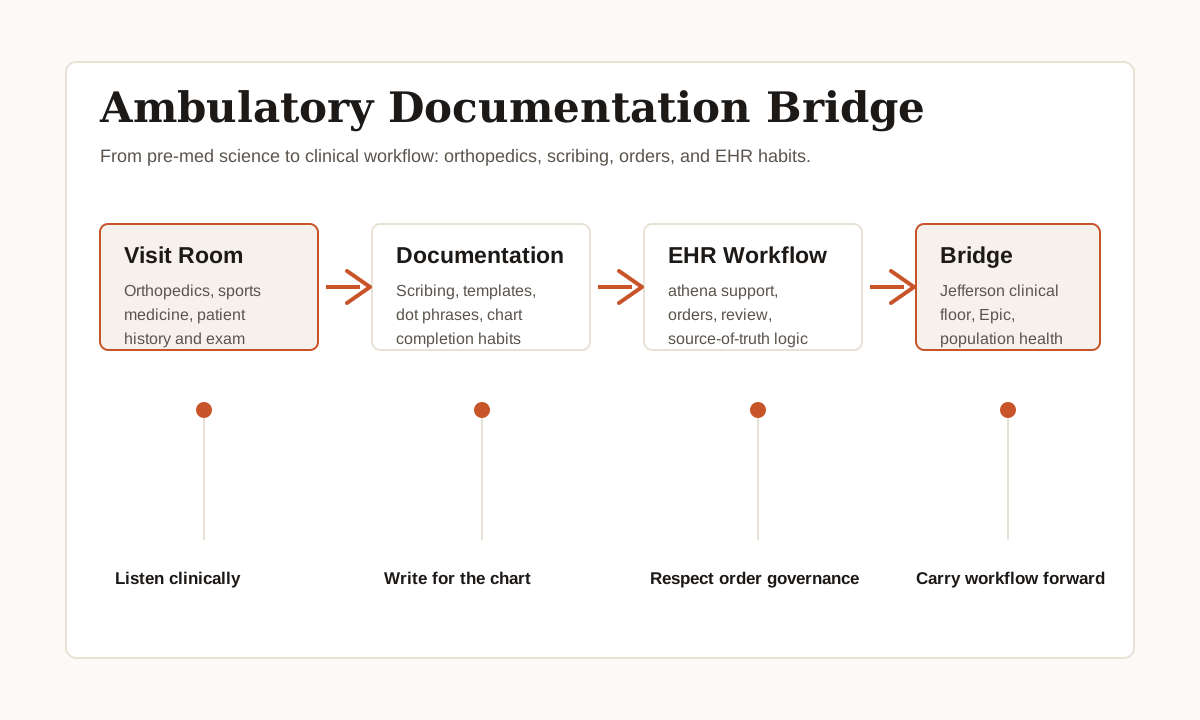
The workflow was visit room, documentation, EHR workflow, then downstream clinical operations. That chain later made Epic, SmartPhrases, SmartTexts, population health outreach, and AI documentation questions much easier to understand.
Implementation Playbook
For students or early-career healthcare operators using a scribe role well, I would treat it as more than shadowing:
- Learn the visit pattern for the specialty.
- Listen for the clinical decision behind the words spoken.
- Understand which parts of the note support care, billing, follow-up, and quality.
- Watch how clinicians use templates and where templates fail.
- Learn order-entry governance and never confuse support with independent authority.
- Track what information the next person needs to act safely.
- Notice when EHR structure helps the visit and when it interrupts it.
- Build a personal library of documentation patterns.
- Ask what the patient will experience after the chart is signed.
- Carry the lesson forward: documentation is workflow infrastructure.
That final point is the durable lesson. Documentation is one of the systems that coordinates care.
Standards, Governance, And Validation
The governance standard for this kind of work is clear role boundary.
A scribe or intern can support documentation and workflow, but the clinician owns the clinical judgment. Order-entry support has to happen under direction, review, and the practice’s rules. That boundary keeps workflow support from becoming unsafe role confusion.
The validation questions were practical:
- Did the note reflect the clinical encounter accurately?
- Did the clinician have the right information to review?
- Were orders entered according to direction and workflow rules?
- Would the next person understand the plan?
- Did templates speed the work without hiding clinical nuance?
- Did the documentation support continuity, follow-up, and completion?
Those questions later became much larger in my work. AI-generated summaries, benefit answers, speech analytics labels, Epic outreach templates, and patient education materials all have the same core issue: the output has to be useful, reviewed, and connected to the right source of truth.
Results And Evidence
| Signal | What It Shows |
|---|---|
| Ambulatory orthopedics and sports medicine documentation | I learned specialty visit flow in a fast-moving outpatient environment. |
| athena workflow support | I gained early experience with EHR source-of-truth logic before Epic-heavy work at Jefferson. |
| Order-entry support under direction | I learned governance around clinical support roles and review. |
| Dot phrases and charting shortcuts | I started seeing templates as operational tools with real workflow consequences. |
| Bridge into Jefferson | The internship made the transition from medical assistant certification to clinical-floor work more practical. |
The evidence is mainly first-person operating evidence, supported by public context sources on athenahealth, orthopedics, and EHR usability/provider burden. I am not claiming quantified outcomes from the internship.
My Operating View
This internship changed how I think about documentation.
Before working in ambulatory documentation, it is easy to think of charting as a back-office task. After doing the work, you realize the chart is part of the operating system of care. It decides what the next clinician can see, what orders happen, what follow-up is possible, what gets billed, what quality data can be trusted, and how much cognitive burden clinicians carry.
That lesson is one reason I am skeptical of shallow healthcare AI demos. A generated note, summary, order suggestion, outreach message, or benefit answer only helps when it fits the workflow, preserves clinical meaning, respects role clarity, and survives review by the person accountable for the decision.
The iScribe internship was small compared with later projects, but it gave me a durable lens: if the documentation layer is weak, the operational layer becomes weak too.
Reusable Checklist
Use this checklist when evaluating a clinical documentation workflow:
| Question | Why It Matters |
|---|---|
| Who owns the clinical judgment? | Role clarity keeps documentation support safe. |
| What is the source of truth? | The EHR must reflect the reviewed clinical record. |
| What information is needed for follow-up? | Notes need to support current and future care. |
| Which templates save time? | Good templates reduce burden without flattening nuance. |
| Which templates create risk? | Bad templates hide missing details or encourage autopilot documentation. |
| How are orders reviewed? | Order-entry support needs governance and clinician accountability. |
| What part of the visit becomes structured data? | Structured fields shape reporting, quality, and operations. |
| What does the patient experience after the visit? | Documentation should support the next action after the encounter. |
The practical advice for students is to treat scribing as systems training. If you pay attention, you will learn specialty workflow, EHR structure, clinical reasoning, role clarity, and why healthcare technology succeeds or fails in practice.
References
Athenahealth, orthopedics, and EHR usability sources provide the public context for this internship. iScribe’s public web presence was not available during drafting, so the organization reference comes from my profile and personal history.
Patient details, clinician names, practice names, and private workflow specifics are left out. The public claim is limited to the operating lesson: the internship taught me how ambulatory documentation, order-entry support, templates, and EHR workflows connect clinical intent to operational execution.
Frequently Asked Questions
- What did I do during the iScribe internship?
- I worked as an ambulatory orthopedics medical scribe and clinical operations intern, supporting documentation, charting shortcuts, athena workflows, and order-entry support under clinical direction and review.
- Why did a scribe internship matter before Jefferson?
- It gave me clinical workflow exposure after UNC Charlotte and medical assistant training, before starting at Jefferson. It made visit documentation, specialty workflows, EHR source-of-truth logic, and clinician review feel practical.
- What is the operating lesson from ambulatory scribing?
- Documentation is not clerical residue. It is part of care delivery, billing, follow-up, clinical memory, quality, and patient access. Poor documentation design creates downstream operational friction.
Cited Sources
- athenahealth athenahealth
Public context for the EHR ecosystem referenced in this internship.
- athenaOne Electronic Health Records athenahealth
Public context for athenahealth's ambulatory EHR offerings.
- AAOS American Academy of Orthopaedic Surgeons
Public specialty context for ambulatory orthopedics and sports medicine.
- Usability and Provider Burden Assistant Secretary for Technology Policy / Office of the National Coordinator for Health IT
Public context for clinical documentation, EHR usability, and provider burden.